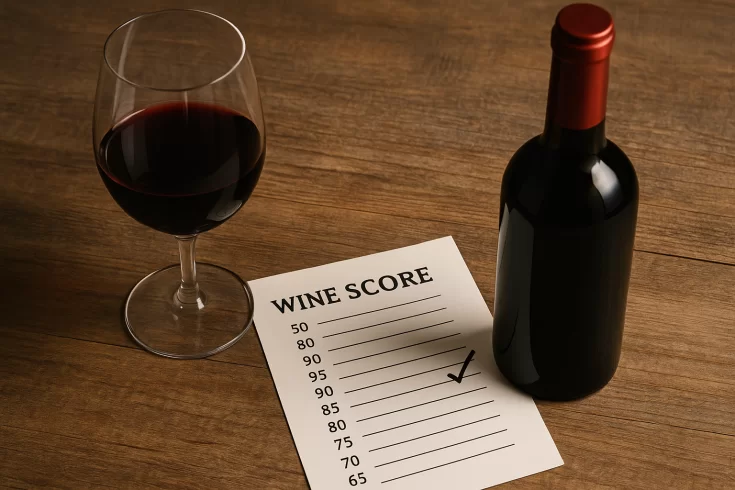
Understanding the 50-100 Point Wine Scoring System
Wine has always inspired debate, delight, and sometimes a little confusion. Among the many ways we attempt to measure its quality, one of the most recognised worldwide is the 50 - 100 point scoring system. It’s a method that gives enthusiasts and collectors a quick benchmark, yet behind each number is a rigorous process shaped by history, discipline, and palate.
The origin of this system can be traced back to the 1970s, when American wine critic Robert Parker popularised it. His aim was simple: provide consumers with a clear, standardised, and trustworthy way to navigate the increasingly complex world of wine. The structure mirrored the academic grading scale familiar to most - where 100 was perfection and anything below 50 was essentially failing. Over time, it became the industry’s common language, adopted by leading wine publications, competitions, and professionals across the globe.
How does it actually work? Tasters begin with a base score of 50 points, awarded automatically for a wine simply being technically sound and drinkable. From there, the evaluation unfolds in layers:
-
Up to 5 points for colour and appearance.
-
Up to 15 points for aroma and bouquet, which capture both intensity and complexity.
-
Up to 20 points for flavour and mouthfeel, including balance, structure, and depth.
-
Up to 10 points for overall impression and aging potential.
These categories combine to create the final tally. A wine that earns between 85 and 89 is considered very good, 90 to 94 excellent, and anything from 95 upward falls into the outstanding or extraordinary tier. Wines rarely, if ever, receive a perfect 100 - such a score is reserved for bottles that transcend expectations, offering something nearly flawless and deeply moving.
Professional tasters don’t rely on a single sip. They approach wines in controlled conditions, often blind, without labels to influence perception. Temperature, glassware, and even the surrounding environment are carefully managed. They swirl, sniff, sip, and then often revisit the glass after minutes or even hours, as wines evolve in the air. Consistency across multiple tastings is key; one fleeting impression is never enough to justify a published score.
It’s worth remembering that while the numbers provide structure, they are not the whole story. A 92-point Shiraz may be technically brilliant, but a humble 86-point Riesling might spark just as much joy depending on the moment, the meal, or the company. Scores offer guidance, not absolute truth. They reflect the experience of trained palates, yet wine remains a personal journey.
In short, the 50-100 point scale brings order to a world defined by nuance. It gives consumers confidence, offers winemakers recognition, and helps the global wine conversation flow in a shared language. Still, behind every number lies the same essential truth: a bottle of wine is meant to be opened, shared, and enjoyed.
Latest News


© 2026 Wineography